Castle Avenue
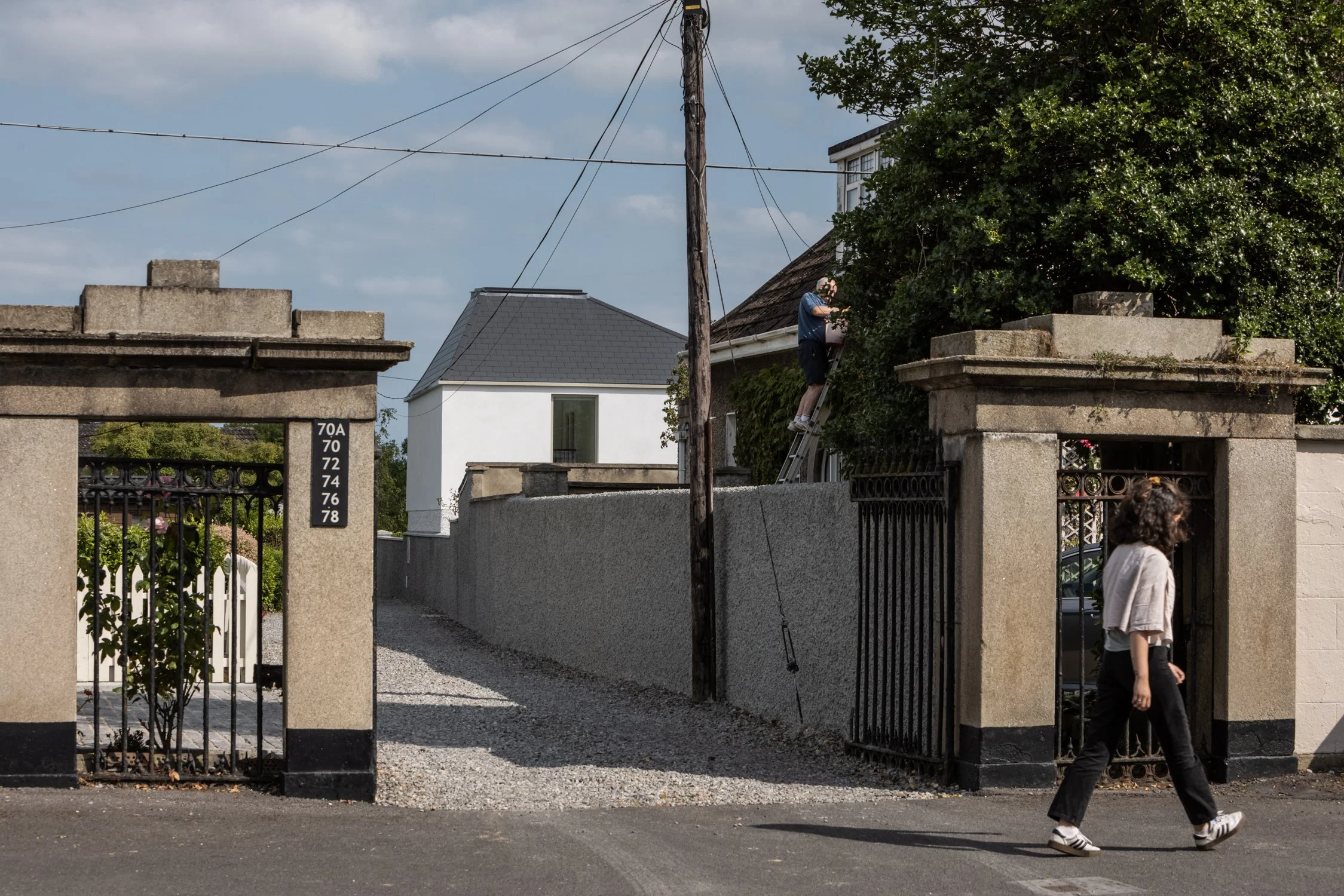
This project seeks to provide a simple compact contemporary mews house for a couple, preparing for retirement, to downsize into a functional and energy efficient home to the rear of their family home. The new house is situated in their original long back garden, down a quiet cul-de-sac serving 6 other dwellings.
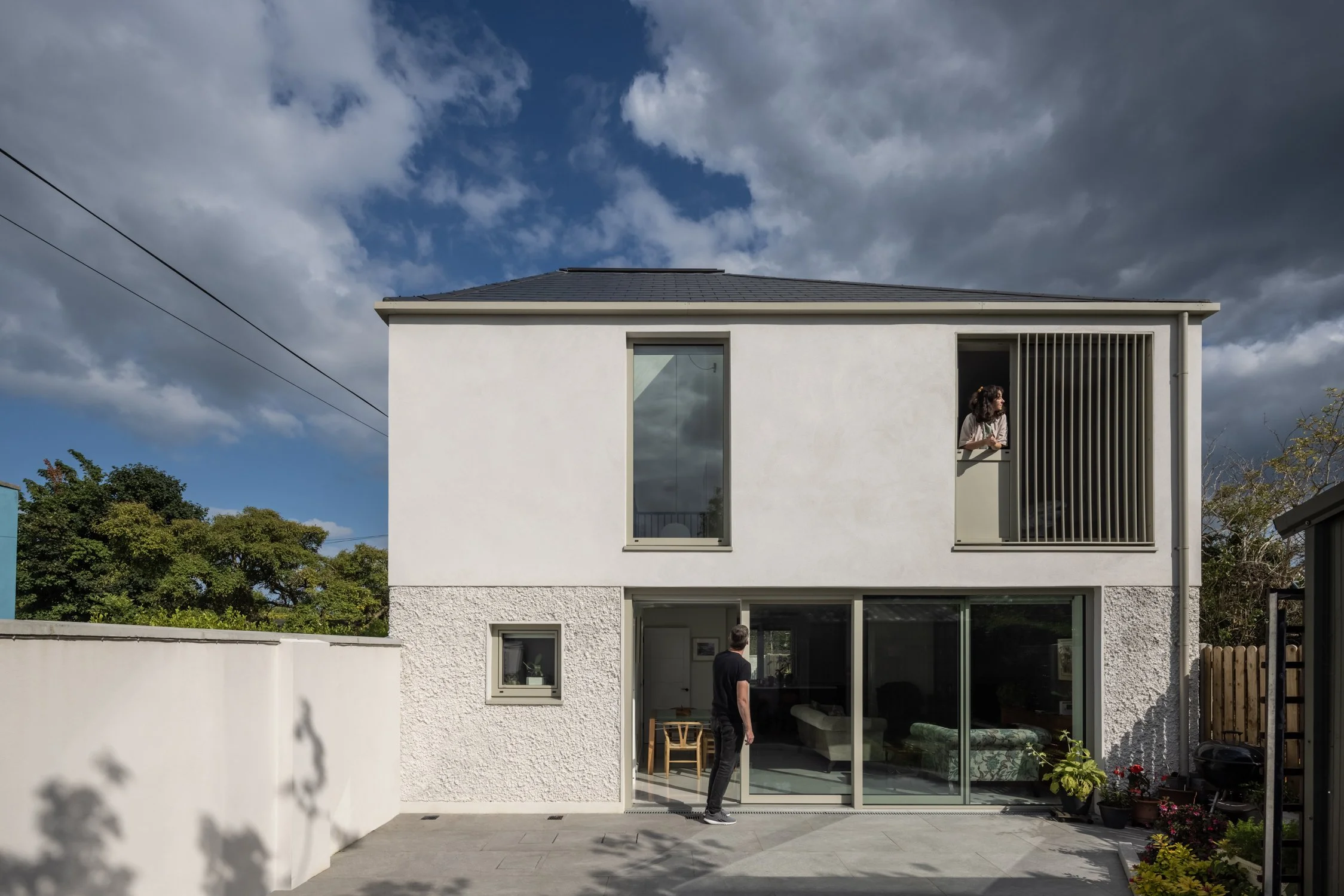
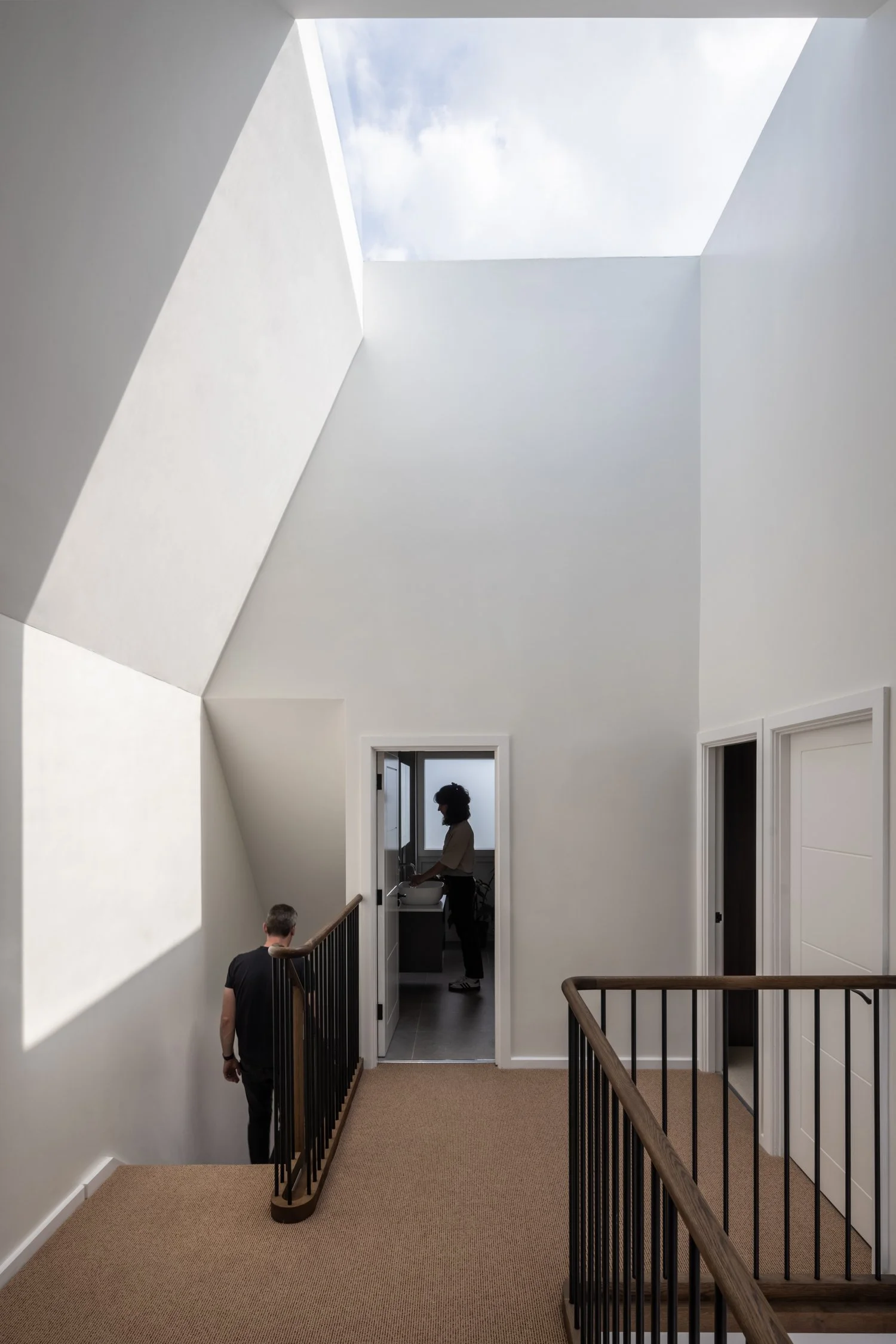
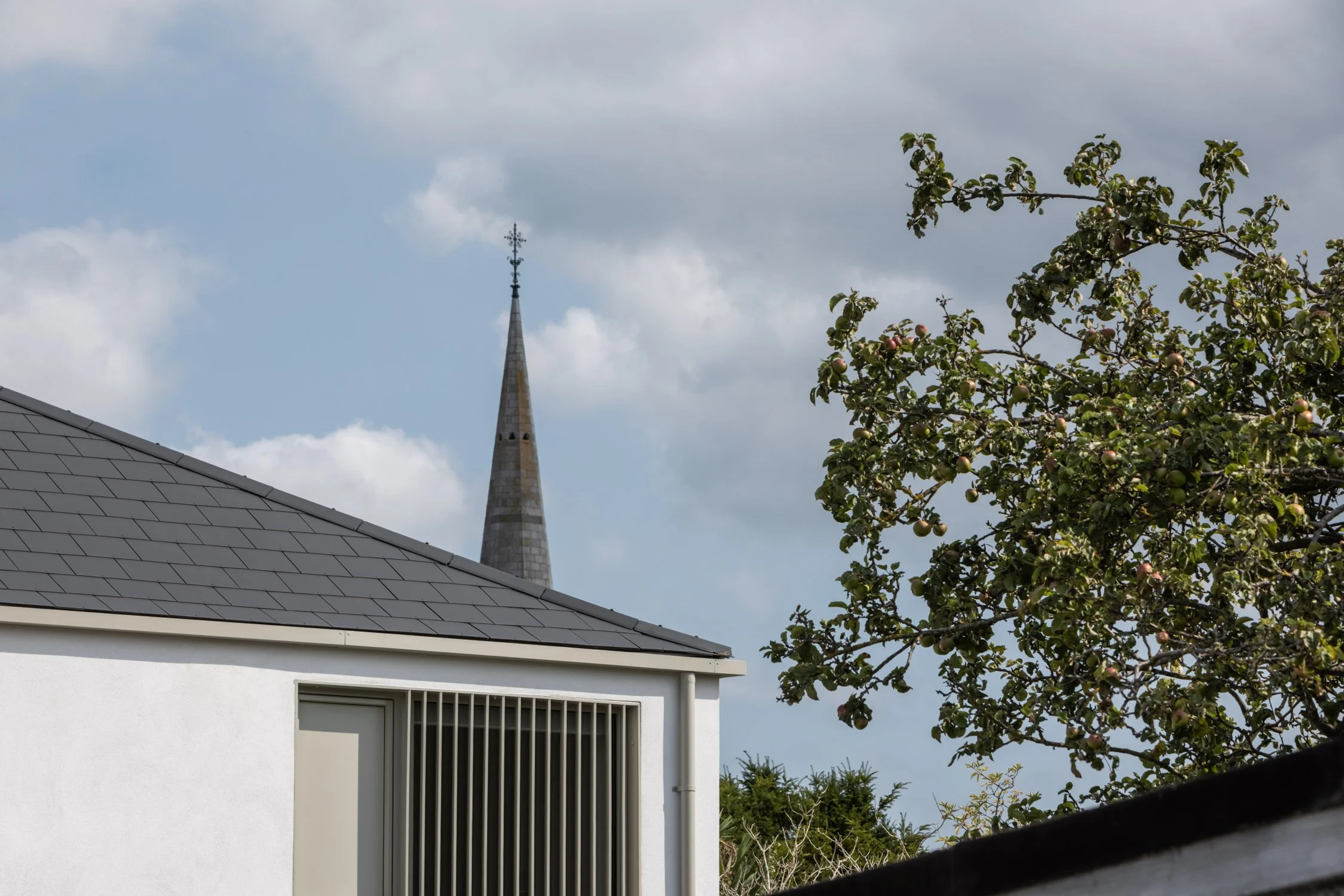
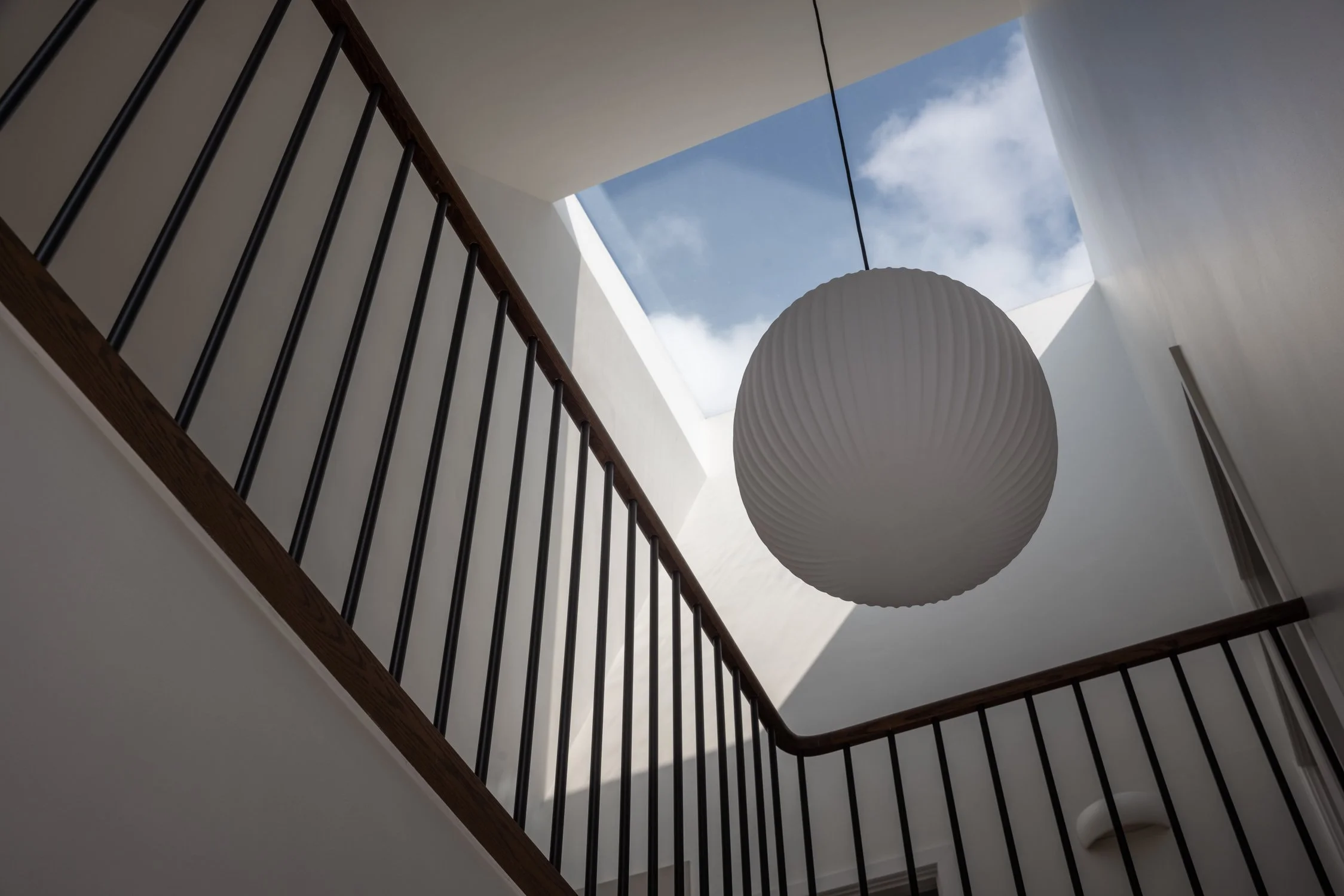
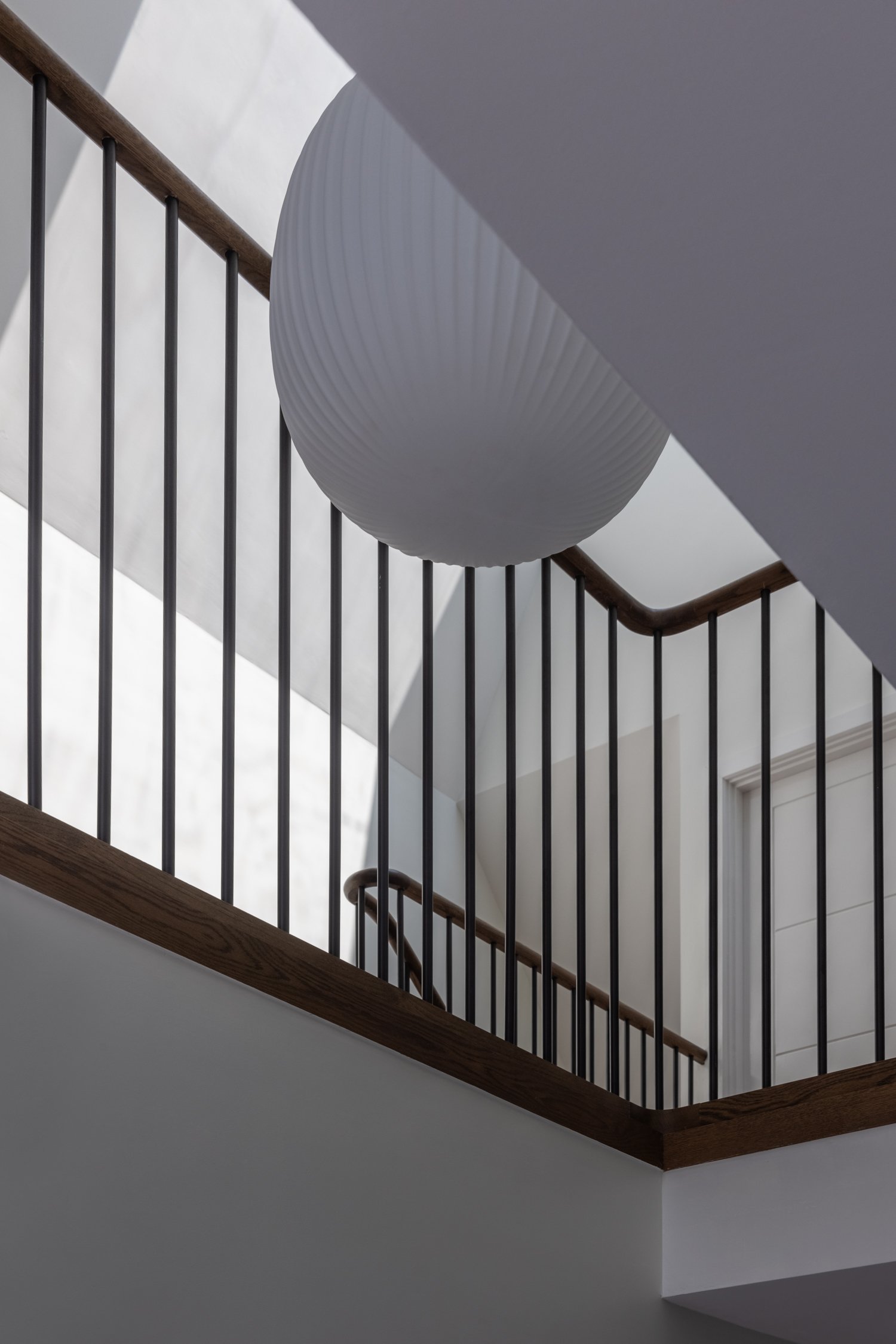
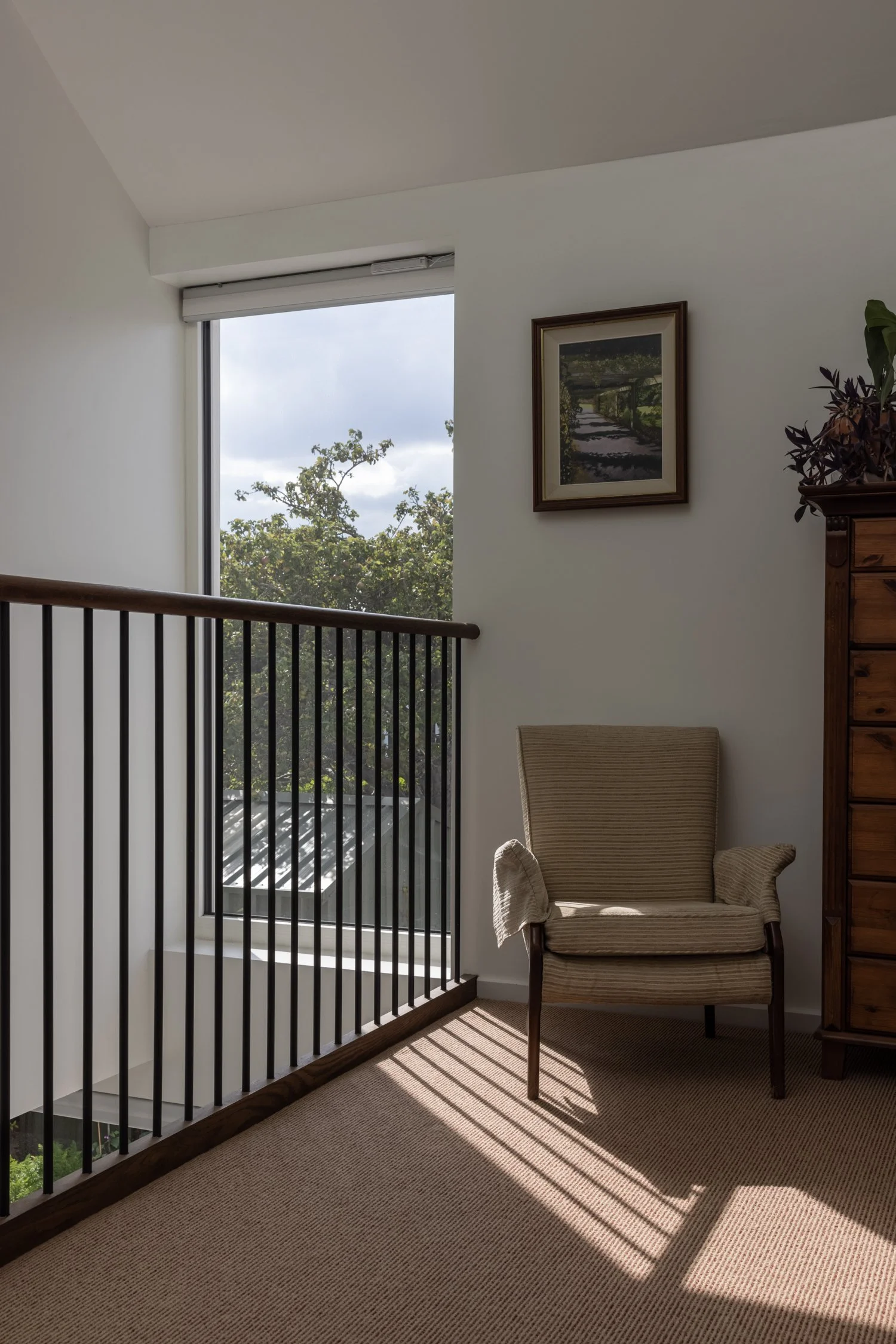
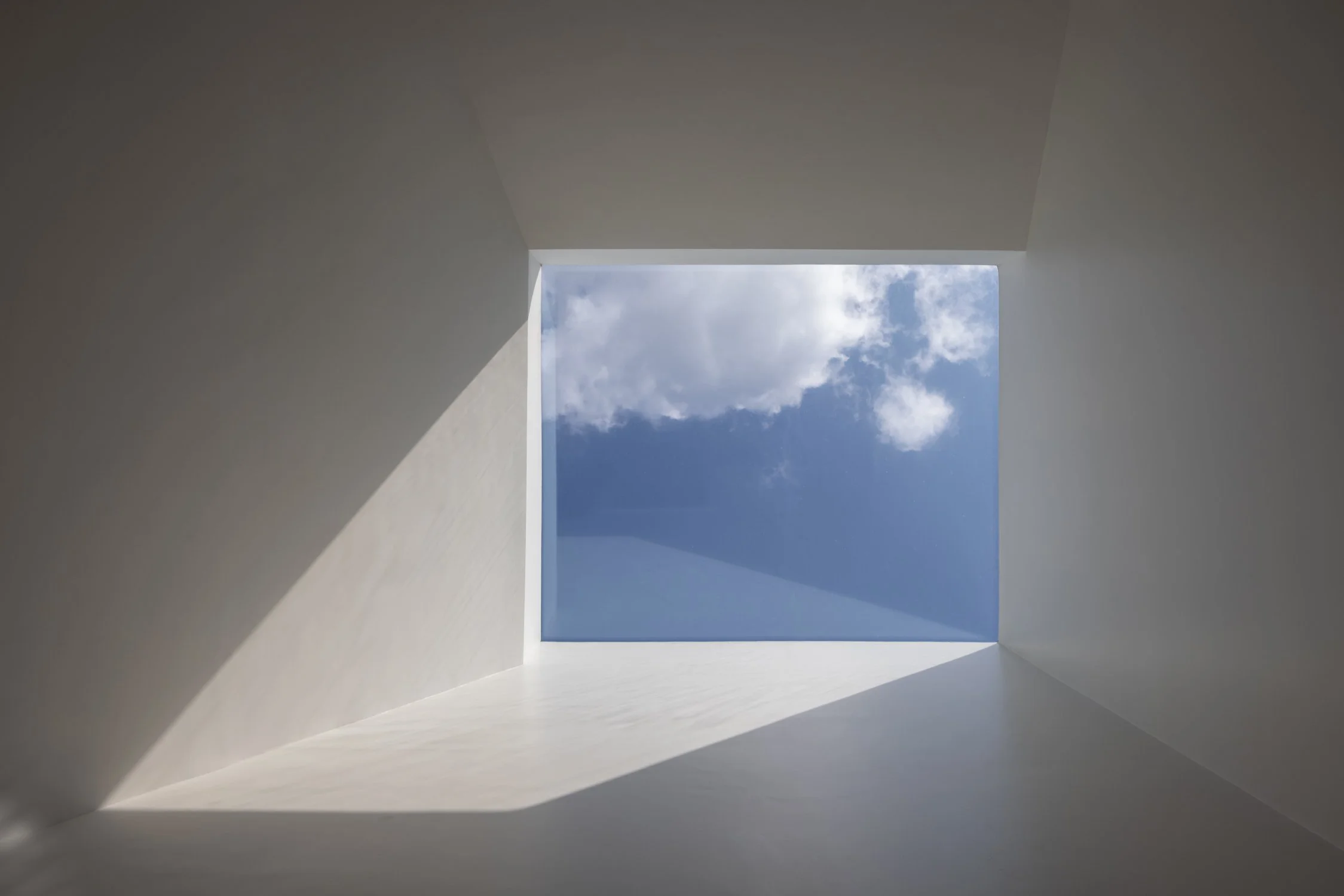
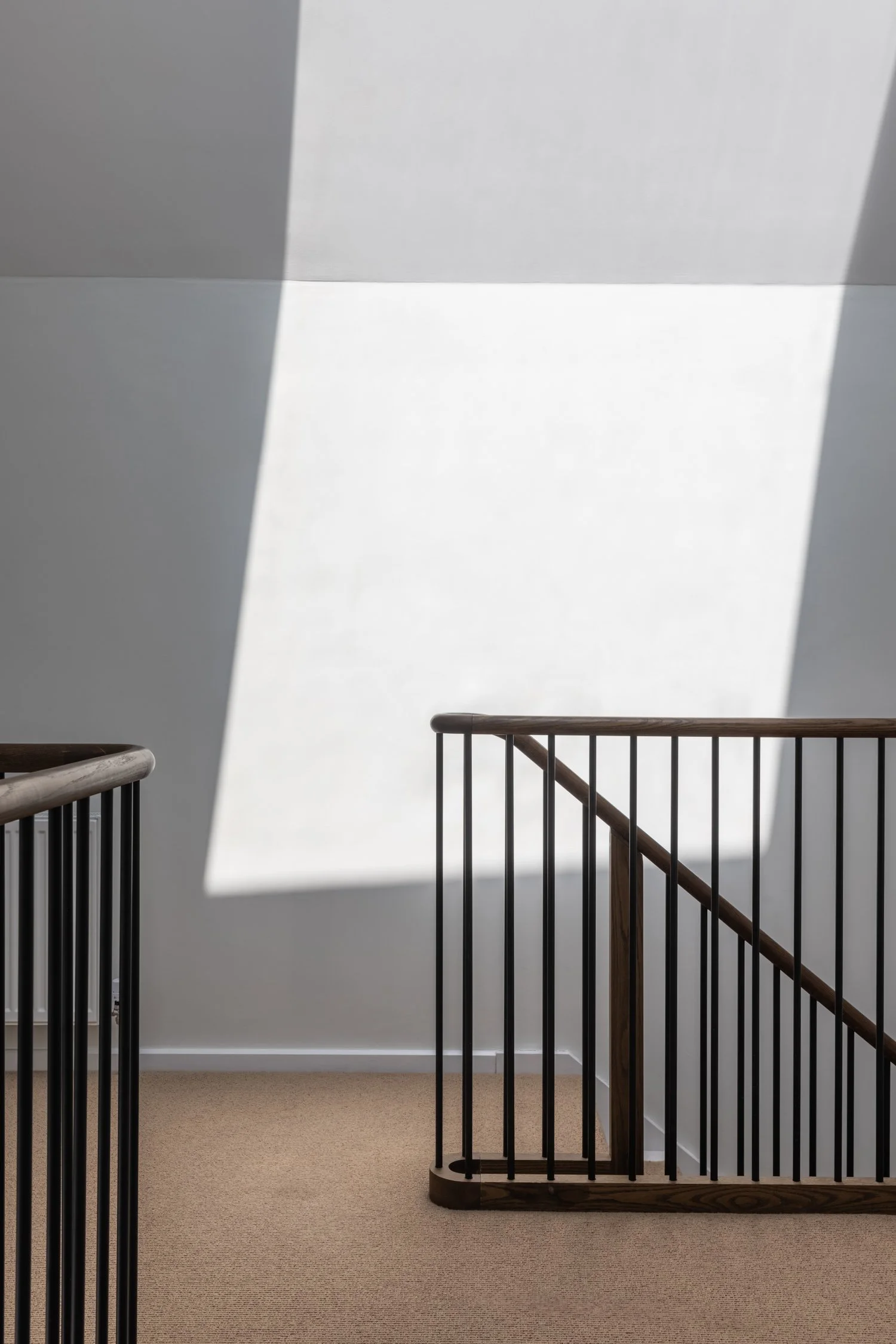
It relates to its suburban context in scale, form and material but is contemporary in detail. Materials are kept simple with contrasting white sand cement and wet dash renders, to provide variance across the façade, and dark roof tiles to blend into existing roofs in the vicinity. The stairs has a continuous curved stained oak handrail which leads to the landing and office space which is flooded with light from a large rooflight above. Light is drawn down into the ground floor living space through a void to create a sense of openness and generosity within the compact plan.
Large windows maximise light in the two bedrooms and bathroom, with bespoke metal fins fitted to the external window reveals to provide privacy where necessary. The kitchen and living area are separated by double sliding pocket doors, allowing the room to be opened up when desired, creating a direct connection from kitchen, to living area, to west-facing back garden through the large sliding door. This house is an example of contemporary suburban infill housing and shows how we can densify our suburbs without compromising on design quality or on the existing context.
This modest house has been designed with level threshold access to both front and rear and a plan which allows free movement across the floor plate for all users. The plan is flexible to allow for alterations to facilitate ground floor living should the need arise in the future.
Keeping our clients in the heart of their community by maximising the potential of the site and increasing the density of housing in the area was key driver of the project the result is an A2 home which is highly insulated with an air-to-water heat pump, as well as a mechanical-ventilation-heat-recovery system, which will all work efficiently due to high thermal and airtightness performance of all the elements of the building envelope.
Consistent and plentiful daylighting as well as passive solar gains was central to the development of the design.
Location: Dublin 3
Status: Complete
Architects: Architectural Farm
Engineer: Kavanagh Ryan
Photographs: Ste Murray
Main Contractor: FJB Construction
Awards/Press
RIAI Irish Architecture Awards 2025 - Commended
Irish Architecture Foundations Open House Dublin 2024